

What are the calibration methods of the float level meter?
Release time:
2022-12-14
The float level gauge is a liquid level measuring instrument designed according to Archimedes principle and magnetic coupling principle. The instrument can be used to measure liquid level, liquid level and density, and is responsible for outputting upper and lower limit alarm signals. The float level gauge is specially used to measure the liquid level in the pressure vessel and consists of four basic parts: float, spring, magnetic steel chamber and indicator.
The float level gauge is a liquid level measuring instrument designed according to Archimedes principle and magnetic coupling principle. The instrument can be used to measure liquid level, liquid level and density, and is responsible for outputting upper and lower limit alarm signals. The float level gauge is specially used to measure the liquid level in the pressure vessel and consists of four basic parts: float, spring, magnetic steel chamber and indicator.
As a standard testing instrument, the float level gauge needs to be calibrated regularly to confirm the accuracy and linearity of the float level gauge. Float gauges in operation should also be calibrated to meet the needs of field use after maintenance. The purpose of the two calibration work is different, and the actual use tends to focus on the latter. There are two methods for calibrating the float: the weight suspension method standard method and the field water calibration method comparison method.
1. lifting weight calibration method. According to the measuring principle of the float level gauge, the float level gauge measures the height of the liquid level according to the torque. Therefore, the calibration of the float level gauge should be carried out at zero and full point according to the set torque. This calibration method is called suspension calibration. Just like the calibration process of the target flowmeter, the float level gauge also needs to simulate the force of the float through the standard weight, and adjust the zero point and full degree of the float level gauge respectively. The suspension weight method has high calibration accuracy, good linearity, and can be calibrated in full range. It is mainly used for the periodic calibration of the performance test of the float level gauge itself. In addition, since the inner float level gauge does not have a measuring cylinder, this method is used for calibration.
2. the on-site water calibration method. Water calibration is a commonly used calibration method of external float level gauge, which uses clean tap water that is easily available in life as the measured liquid in the simulation test. This calibration method can carry out on-site rapid calibration without disassembling the level meter, and is widely used in the setting calibration, fault maintenance calibration and zero full-scale calibration of the level meter outside the site.
When calibrating the float level gauge with water on site, first modify the parameters in the transmitter, change the density value of the measured liquid to the density of water, and then obtain a new measuring range. Note that the measuring range cannot exceed the bearing range of the transmitter. Water calibration is a comparative calibration method. The density of clean tap water is regarded as 1. Comparing the density ρ of the measured liquid with the density of water, three conditions can be obtained: 1. If the density of the measured liquid is greater than 1, even if the measuring cylinder is filled with tap water, the pulling force of the steel wire when the measured liquid is filled cannot be reached. At this time, the calibration value is within the true setting range and belongs to incomplete calibration. 2. If the density of the measured liquid is less than 1, when the measuring cylinder is filled with tap water during water calibration, the steel wire tension exceeds the normal setting range. Especially when the density of the measured liquid is small, the transmitter may be damaged due to over-range calibration. At this time, the parameter range requirements on the buoy mark should be checked, and the calibration height should be converted so that the measuring cylinder cannot be filled with water to protect the transmitter from damage. 3. When the density of the measured liquid is very close to 1, water is used to simulate the measured liquid for calibration.
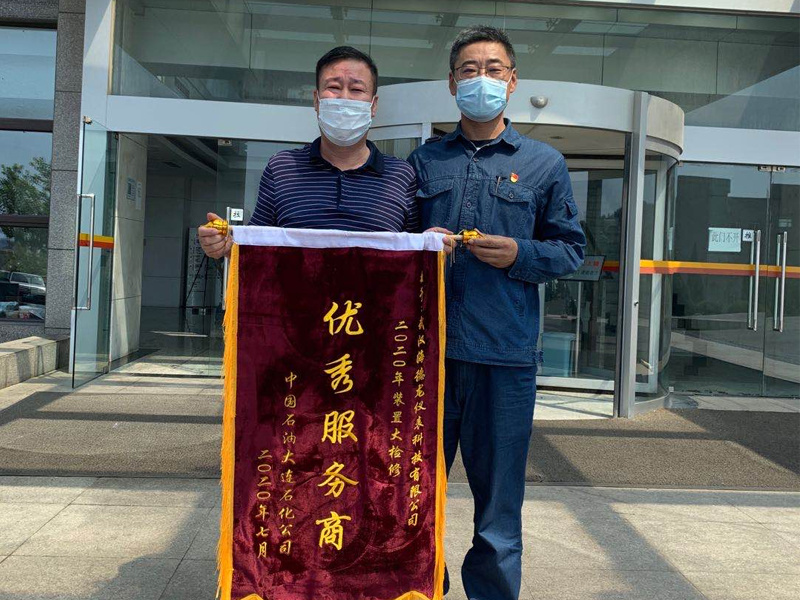
Dalian Petrochemical to Wuhan Hyde Dragon Company Award
With more than 30 years of professional experience in the production of liquid level gauge products, including "magnetic vacuum level gauge", "oil automatic dehydrator", "flame monitoring system", including more than a dozen technical patents and product patents.
2024-10-24
How to improve the level of the manufacturing process of the product?
Want to improve the liquid level gauge manufacturing process? From optimizing the production process, material selection to technological innovation, comprehensive improvement can meet the market challenges!
2024-09-24
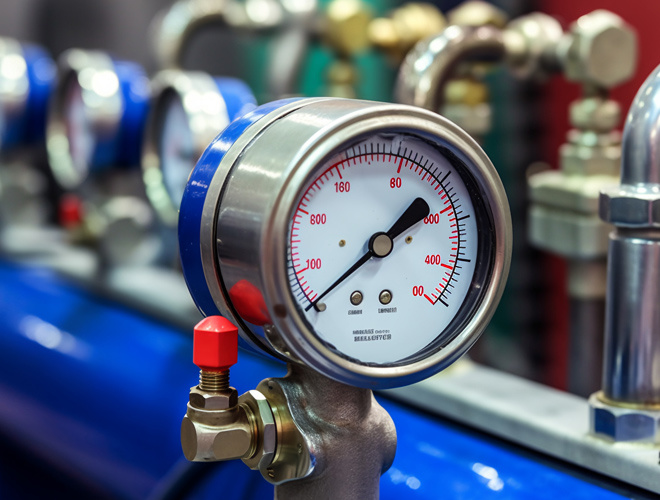
Research and Development Process and Technological Breakthrough of Liquid Level Meter Products
This paper deeply discusses the research and development process and technological breakthrough of vacuum type magnetic level gauge, and reveals the importance of this product in industrial applications and the future development direction. Come and learn about this exciting technological evolution!
2024-09-14


Official
Wuhan Haidelong Instrument Technology
Address: No.12, Jiutong Road, Cihui Street, Dongxihu District, Wuhan City, Hubei Province
Copyright©Wuhan Hydron Instrument Technology Co., Ltd.