

One minute to introduce the relevant knowledge of float level gauge
Release time:
2022-11-24
The float level gauge uses a high-precision stress sensor. Through the lever principle, the buoyancy of the inner cylinder in the liquid is directly transmitted to the sensor through HART communication protocol, so that the sensor can obtain a measurement signal consistent with the buoyancy, and then converted into a 4~20 mA DC standard signal by a special circuit. The output float level gauge has the advantages of light volume, good linearity, stable output, high precision, convenient installation, etc, it can be widely used to measure the liquid level and boundary of various media.
The float level gauge uses a high-precision stress sensor. Through the lever principle, the buoyancy of the inner cylinder in the liquid is directly transmitted to the sensor through HART communication protocol, so that the sensor can obtain a measurement signal consistent with the buoyancy, and then converted into a 4~20 mA DC standard signal by a special circuit. The output float level gauge has the advantages of light volume, good linearity, stable output, high precision, convenient installation, etc, it can be widely used to measure the liquid level and boundary of various media.
In the field, the float level gauge is often inaccurate (large deviation from the indication of the glass plate in the field). At this time, it is generally necessary to calibrate the float. There are two calibration methods: suspension weight method and water method. The lifting method requires the float to be removed from the device under test, so it is mostly used in the laboratory or during shutdown maintenance, while the sprinkler method is mostly used in the field. This method can be carried out without disassembling the float, and the maneuverability is stronger. The specific steps of the watering method calibration are described in detail below.
1. Clear Offset: The parameter Level Offset of the float level gauge is a zero migration amount. Before calibration, set this value to 0. (The manual operator step is Online -> Basic Setup -> PV -> Level Offset, set this parameter to 0, and press Send to complete sending).
2. Setup Wizard: There are various parameters under this option, including unit, weight, volume, size, buoy torque, meter head position, measurement type (boundary/liquid level), etc. The parameters in this option should not be easily modified during calibration to avoid restoring the correct parameter values. If a new buoy is replaced, all parameters should be set correctly according to the actual situation.
3. Dry coupling: Due to the small working range of the float level gauge, "dry coupling" is required during calibration to ensure that the actual application range is within the measurable range of the float, otherwise the float may not work.
4. There are three calibration methods: two-point calibration, wet/dry calibration and one-point calibration.
(1) Two-point method: This method is suitable for measuring the liquid level or boundary position in the buoy from the outside. with high accuracy. Usually a glass plate is installed on site, and the change of liquid level can be directly observed and measured through the glass plate. Therefore, the two-point method is often used for field calibration.
(2) Zero/span method: If the actual liquid level is unknown, but the change of liquid level can make the buoy completely leave the liquid level or completely sink into the water, the zero/span method can be used for calibration. In terms of calibration accuracy, this method is inferior to the two-point method, but superior to the single-point method.
(3) Single-point method: If it is impossible to lower the liquid level to make the float completely leave the liquid level or raise the liquid level to make the float completely submerged, the single-point method can be used for punctuation. The accuracy of this method is not as good as the above two methods. It is required that a point liquid level can be measured from the outside and the zero point has been marked.
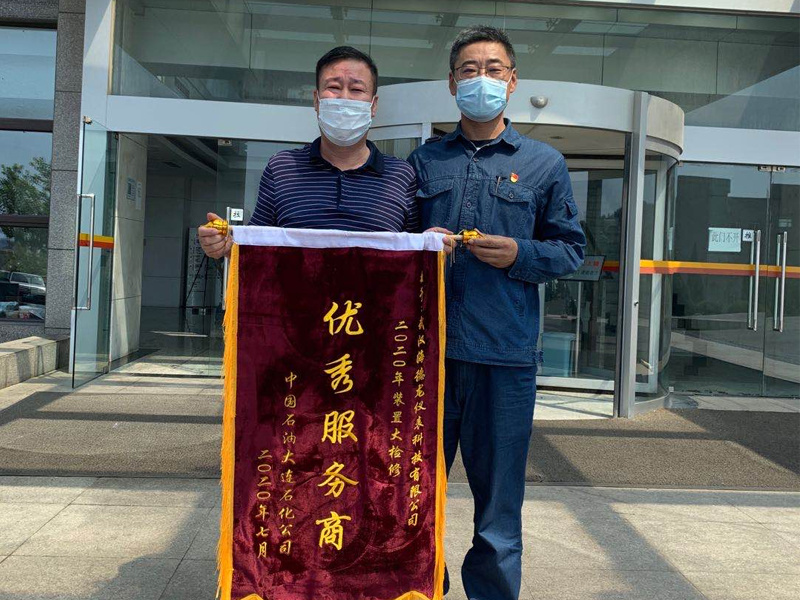
Dalian Petrochemical to Wuhan Hyde Dragon Company Award
With more than 30 years of professional experience in the production of liquid level gauge products, including "magnetic vacuum level gauge", "oil automatic dehydrator", "flame monitoring system", including more than a dozen technical patents and product patents.
2024-10-24
How to improve the level of the manufacturing process of the product?
Want to improve the liquid level gauge manufacturing process? From optimizing the production process, material selection to technological innovation, comprehensive improvement can meet the market challenges!
2024-09-24
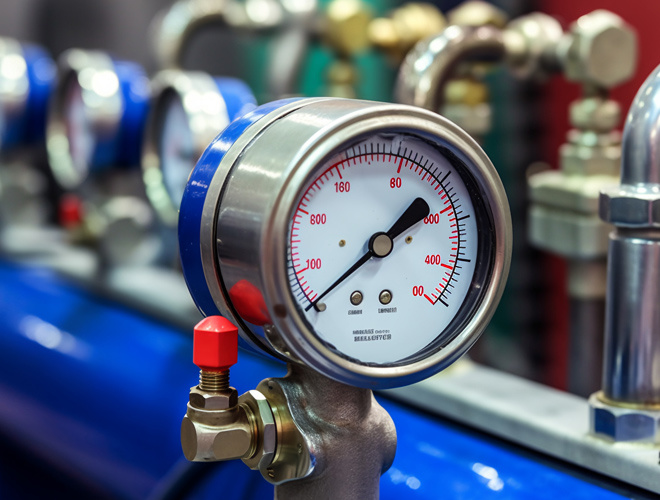
Research and Development Process and Technological Breakthrough of Liquid Level Meter Products
This paper deeply discusses the research and development process and technological breakthrough of vacuum type magnetic level gauge, and reveals the importance of this product in industrial applications and the future development direction. Come and learn about this exciting technological evolution!
2024-09-14


Official
Wuhan Haidelong Instrument Technology
Address: No.12, Jiutong Road, Cihui Street, Dongxihu District, Wuhan City, Hubei Province
Copyright©Wuhan Hydron Instrument Technology Co., Ltd.